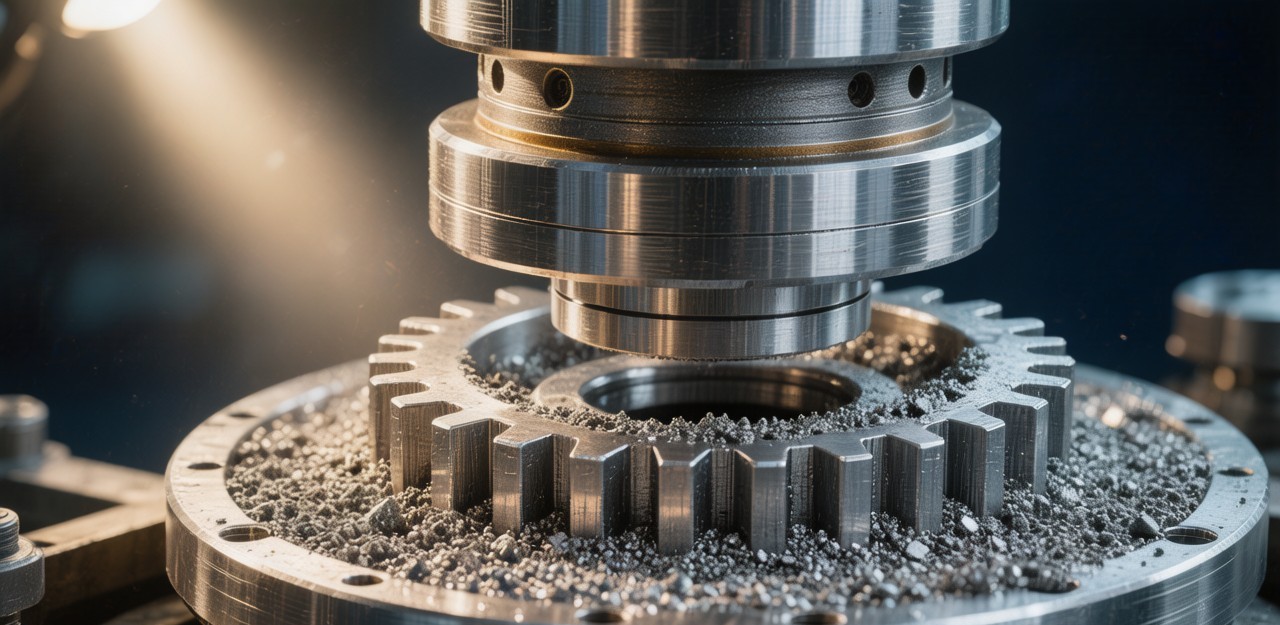
Powder Metallurgy (PM) is a cost-effective manufacturing process for high-volume metal parts. Learn how PM pressing works, its advantages, material options, and typical applications across automotive, industrial, and consumer sectors.
Powder Metallurgy (PM) Guide: Process and Benefits
Powder Metallurgy (PM) transforms metal powders into precision components through compaction and heating. It is one of the most cost-effective methods for high-volume metal parts manufacturing.
The PM Process
- Powder Production - Metal powders are produced through atomization or chemical reduction.
- Blending - Powders are mixed with lubricants for consistent flow.
- Compaction - The powder is compressed in a die under high pressure (400-800 MPa).
- Sintering - The compact is heated below melting point, creating metallurgical bonds.
Advantages of PM
- Cost-effective for high-volume production
- 97%+ material utilization with virtually no scrap
- Controlled porosity for self-lubricating bearings
PM vs MIM
PM is ideal for simpler, larger parts at very high volumes. MIM offers more complex geometries and better mechanical properties. Yujiaxin Tech offers both processes and can recommend the optimal solution.
Request a free quote for your powder metallurgy project.
Need Precision Metal Parts for Your Project?
Yujiaxin Tech specializes in MIM, CNC Machining, Powder Metallurgy, Investment Casting, and Gear Hobbing. Get a free quote within 24 hours.