Miniature Precision Gears
Mechanical Components
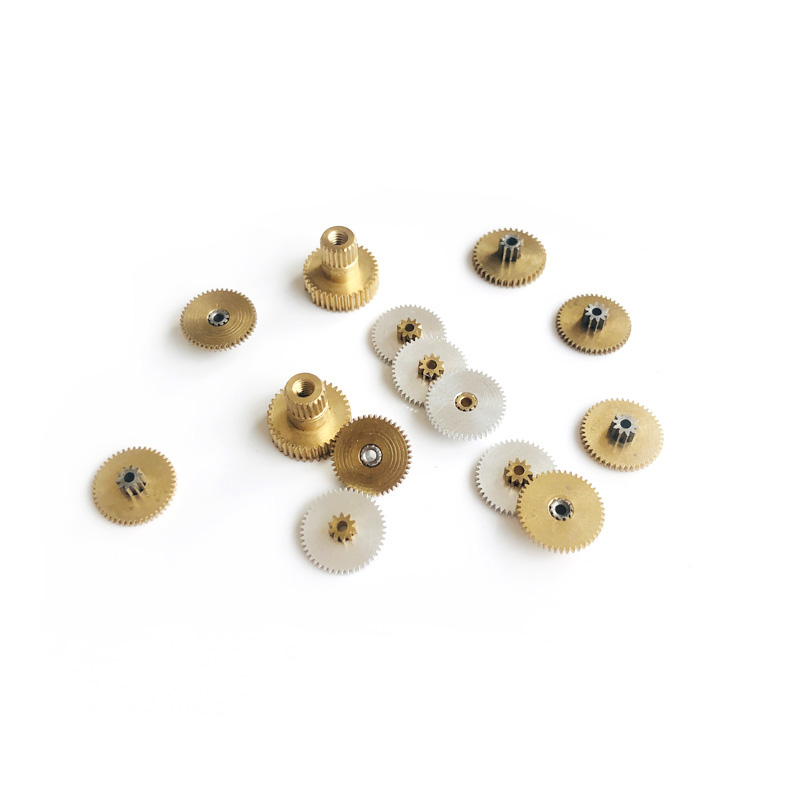
Small module spur, helical and worm gears from module 0.2 to 1.5 mm, held to DIN grade 7 to 9 for micro gearboxes, instruments and compact drive units.
| Category | Mechanical Components |
| Materials | Brass H62, 20CrMnTi, 304 Stainless Steel, POM |
| Industries | Industrial, Automotive, Consumer Electronics, Medical |
Send your drawing or 3D model — engineering review and quotation within 24 hours.
Yujiaxin Tech supplies miniature precision gears for compact drive units, instruments and micro gearboxes. Every gear is produced to the customer drawing, with module, tooth count, bore and backlash agreed before a quotation is issued.
What counts as a miniature gear
Module is pitch diameter divided by tooth count, expressed in millimetres. A gear with module 0.5 and 20 teeth has a 10 mm pitch diameter and an 11 mm outside diameter, so the whole part fits under a fingernail.
Most small module gears we quote sit between module 0.2 and module 1.5. At this scale tooth thickness, bore position and runout decide whether a drive runs quietly, and a few microns of eccentricity is enough to make it audible.
Gear types
A miniature drive usually combines several tooth forms in one housing, so a single project often contains more than one gear type.
| Type | Typical use | Notes |
|---|---|---|
| Miniature spur gear | Single stage reduction, encoder wheels | Simplest to inspect, lowest cost per piece |
| Miniature helical gear | Quieter multi stage gearboxes | Helix angle must match across the pair |
| Worm and worm wheel | High reduction in a small envelope | Self locking depends on lead angle |
| Internal ring gear | Planetary stages, hollow shaft drives | Tooth access limits inspection |
| Cluster or stepped gear | Two ratios on one shaft | Concentricity between tooth sets is critical |
Materials
Material on a small gear is chosen for load, duty cycle and noise target rather than cost alone. Brass runs quietly against a steel pinion and dominates instrument drives, alloy steel appears where torque is higher, and engineering plastics suit dry running low load parts.
| Material | Why it is chosen | Watch out for |
|---|---|---|
| Brass H62 / C36000 | Quiet running, good dimensional stability, low unit cost | Lower strength, not for high torque stages |
| 20CrMnTi alloy steel | Tough core with a wear resistant surface after heat treatment | Distortion after treatment must be allowed for |
| 304 / 316L stainless | Corrosion resistance for humid or cleaned assemblies | Higher unit cost than brass at the same module |
| POM / PEEK | Dry running, low weight, low noise | Thermal expansion shifts backlash |
| Titanium Ti-6Al-4V | Low mass for high speed or portable devices | Galling risk against similar metals |
Typical specifications
| Parameter | Typical range |
|---|---|
| Module | 0.2 to 1.5 mm |
| Number of teeth | 6 to 120 |
| Outside diameter | 2 to 40 mm |
| Bore diameter | 0.5 to 8 mm, or plain shaft with no bore |
| Face width | 0.5 to 8 mm |
| Pressure angle | 20 degrees standard, 14.5 degrees on request |
| Accuracy grade | DIN 3962 grade 7 to 9, AGMA Q10 to Q12 |
| Total composite deviation | 20 to 60 microns depending on module and grade |
| Radial runout | 0.010 to 0.030 mm |
| Backlash in a matched pair | 0.02 to 0.08 mm |
| Tooth flank roughness | Ra 0.4 microns or finer |
These are the ranges we quote most often for miniature gears. Final values are fixed by your drawing and by the housing the gear has to fit.
Accuracy grades
DIN 3962 and AGMA 2000 group gear accuracy into numbered grades, and the difference shows up as noise and transmission error. Grade 9 suits a mechanism that runs occasionally, grade 8 covers most consumer and instrument drives, and grade 7 is where medical, robotics and audio gearboxes usually land.
Grade 6 and finer are possible on small module parts, but inspection cost rises faster than part cost, so we recommend agreeing the grade against a measured functional requirement instead of specifying the tightest available number.
Inspection and documentation
Tooth form is checked on a double flank composite tester, which rolls the part against a master and records total composite deviation and runout in one pass. Profile and lead measurements are added when the drawing calls out a specific grade.
Yujiaxin Tech operates to ISO 9001 and GJB 9001C-2017 quality systems. Shipments can include material certificates, dimensional reports, composite deviation charts and first article inspection data. These gears are supplied as components for your own assembly and approval.
Applications
- Micro gearmotors and planetary gearheads
- Surgical handpieces and dental instruments
- Camera lens drives and optical mounts
- Robotic joints and drone actuators
- Metering devices, locks and office equipment
What to send for a quotation
- 2D drawing or 3D model with module, tooth count, pressure angle and helix angle
- Accuracy grade, or the noise and backlash limits the assembly must meet
- Material grade, and whether a mating pinion is part of the scope
- Bore, keyway or shaft details, and any hub or web features
- Estimated annual volume, and whether prototypes are needed first
FAQ
Can you produce a gear with fewer than 10 teeth?
Yes, but undercut becomes the limiting factor. Below about 17 teeth on a 20 degree pressure angle the drawing usually needs profile shift to avoid a weakened root. Send the tooth count and we confirm the shifted profile before quoting.
Do you supply the mating pinion as well?
A gear pair should be quoted together, because backlash, center distance and helix angle are defined by the pair rather than by one part. Supplying both also removes the risk of two suppliers working to slightly different reference dimensions.
How small can the bore on a micro gear be?
Bores down to 0.5 mm are practical in brass and stainless. Below that, a plain shaft with no bore or a D shaped flat is usually the better design, because the wall under the root becomes the weak point.
What is the minimum order quantity?
Miniature gears are quoted per project rather than from a catalogue. Prototype batches of a few dozen pieces are available, and unit price falls as annual volume grows.
Related pages
Browse the full mechanical components range, review the materials we work with, or send us your drawing for a small module or micro gear quotation.
More in Mechanical Components
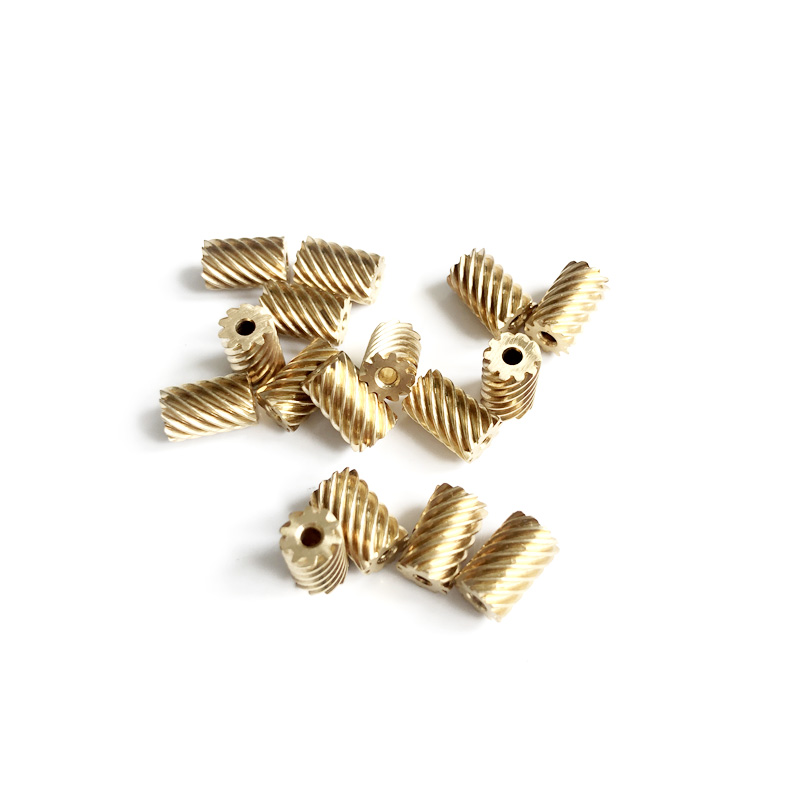
Small Module Multi-Start Worms
Small module multi-start worm shafts machined on CNC turning and whirling centres, module 0.2 mm...
View Details →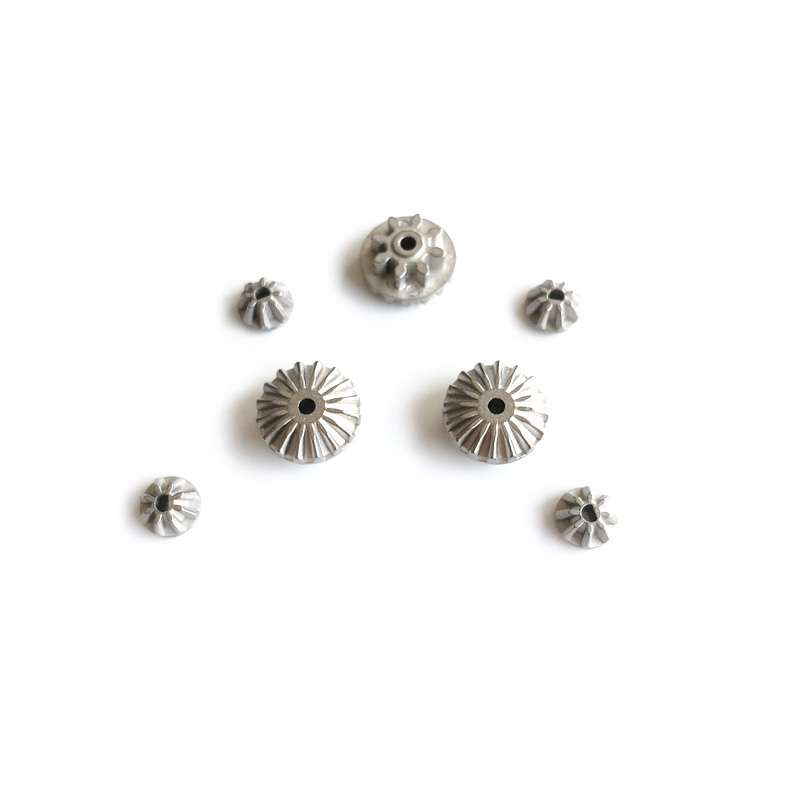
Micro Bevel Gears
Micro bevel gears from module 0.2 to 1.5 mm produced by metal injection molding in 17-4PH, 316L...
View Details →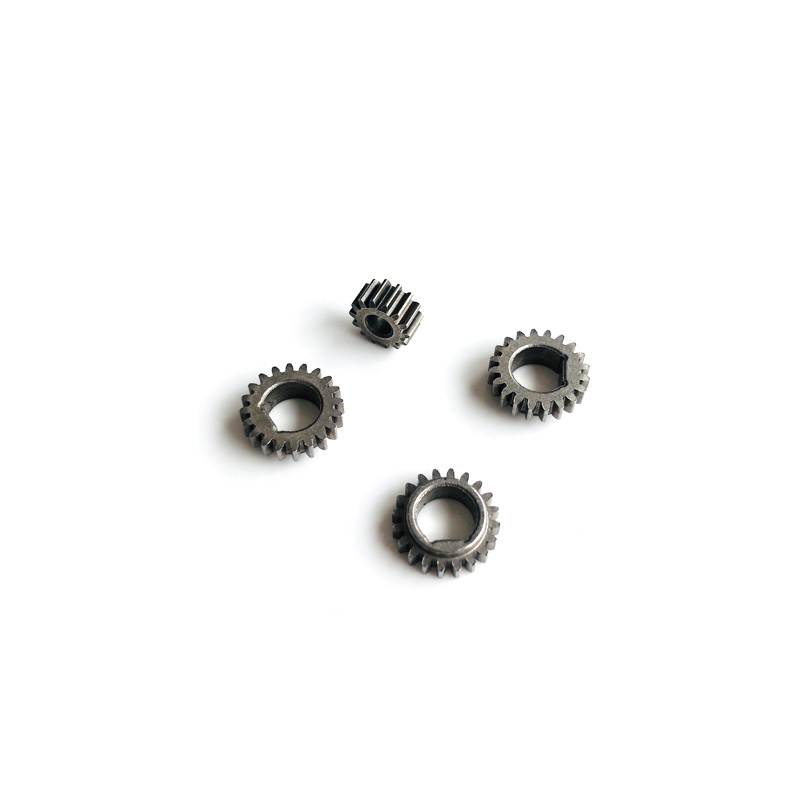
Powder Metallurgy Gears
Powder metallurgy gears pressed and sintered in iron copper carbon steel and stainless steel,...
View Details →