Powder Metallurgy Gears
Mechanical Components
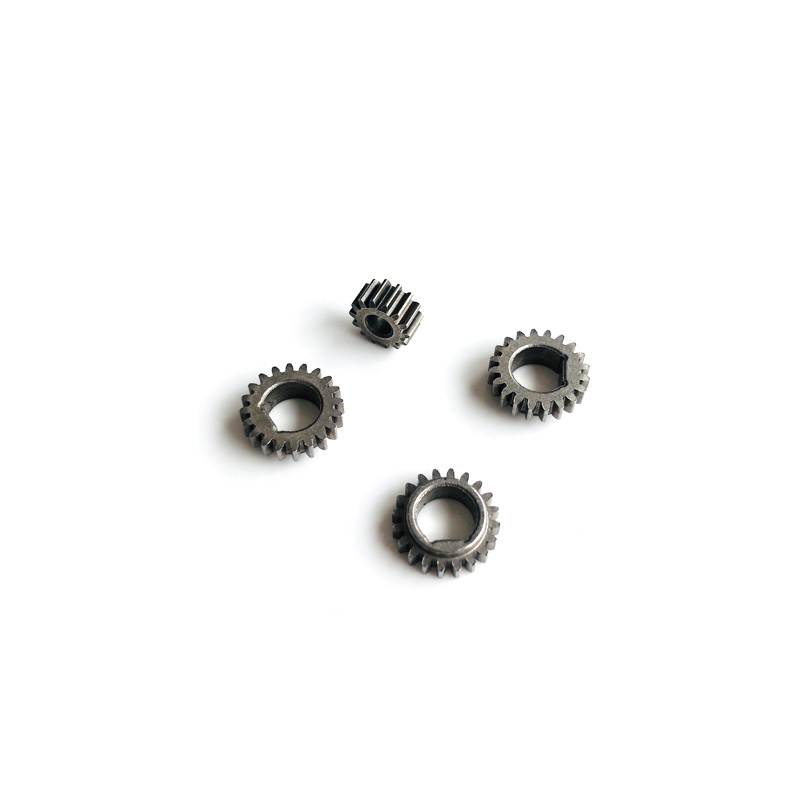
Powder metallurgy gears pressed and sintered in iron copper carbon steel and stainless steel, density 6.2 to 7.2 g/cm3, supplied as near net shape spur gears to your drawing.
| Category | Mechanical Components |
| Materials | Sintered Steel FC-0208, FC-0205, Distaloy AE, Sintered Stainless 316L, Sintered Bronze |
| Industries | Automotive, Power Tools, Industrial, Consumer Electronics, Medical |
Send your drawing or 3D model — engineering review and quotation within 24 hours.
Yujiaxin Tech produces powder metallurgy gears as near net shape parts, pressed from blended metal powder and sintered to a density that suits the load. A gear that would otherwise start as a blank and lose a large share of its mass in chips can often be pressed close to final tooth form in one cycle, with only the bore and one face left for a finishing pass.
What powder metallurgy changes about a gear
The value of the route is not only material saving. One pressing can carry a gear body, a hub, a cam track, a keyway and a counterbore as a single part, so an assembly of three pieces becomes one.
The trade is density. A pressed and sintered gear keeps a controlled amount of porosity, and that porosity lowers tooth root strength and contact fatigue compared with wrought steel of the same alloy. For many drives this is acceptable, provided the design is checked against sintered properties rather than against handbook values for solid steel.
The process in five steps
- Blending: iron, copper, graphite and lubricant are mixed to a fixed recipe, with the lubricant content matched to the press tooling
- Compacting: the blend is pressed in a rigid die at 400 to 800 MPa, which sets density, tooth form and green strength
- Sintering: the part passes through a controlled atmosphere furnace at 1120 to 1150 C, where the particles bond and the alloy develops
- Sizing or coining: the sintered gear runs through a calibration die to tighten the bore, the tooth thickness and the runout
- Finishing: oil impregnation, steam treatment, hardening and tempering, or a light cut on the bore, chosen to match the duty
Materials we press
| Material | Typical density | Typical use | Notes |
|---|---|---|---|
| FC-0208 iron copper carbon | 6.6 to 7.0 g/cm3 | General gears and pumps | The workhorse blend for sintered gears |
| FC-0205 iron copper carbon | 6.8 to 7.1 g/cm3 | Higher strength gears | More copper, better tooth root strength |
| Diffusion bonded steel, Distaloy AE | 7.0 to 7.2 g/cm3 | Loaded transmission gears | Alloyed for hardenability through the section |
| Sintered stainless 316L | 6.4 to 6.8 g/cm3 | Wet or corrosive areas | Corrosion resistance with lower strength |
| Sintered bronze | 6.0 to 6.6 g/cm3 | Light duty and instrument gears | Quiet running, can be oil impregnated |
The blend is chosen against the strength the tooth actually needs, not against the strongest grade available. Moving from FC-0208 to a diffusion bonded steel raises cost and improves hardenability, so the change pays only where the tooth root is the limiting feature.
Typical specifications
| Parameter | Range |
|---|---|
| Module | 0.3 mm to 3 mm |
| Outer diameter | 5 mm to 120 mm |
| Density | 6.2 to 7.2 g/cm3 |
| Tooth accuracy | DIN 8 to 9 as sintered, DIN 7 after sizing |
| Bore tolerance | H7 after sizing |
| Radial runout | 0.03 to 0.05 mm |
| Face width | 2 mm to 25 mm |
| Hardness | 60 to 90 HRB, or 30 to 45 HRC after hardening |
| Surface treatment | Oil impregnation, steam treatment, black oxide |
| Inspection | Density, tooth profile, bore, runout, hardness |
Where the process stops paying off
Three limits usually decide the answer before cost is discussed: tooth load, impact, and volume.
A sintered gear at 6.8 g/cm3 carries roughly 60 to 70 percent of the bending strength of the same alloy in wrought form, so a design with a thin rim and a heavy shock load belongs on another route. Impact is the harder limit, because porosity absorbs energy poorly and a tooth that chips in service is not recoverable by tightening inspection.
Helical and bevel teeth can be pressed, but the tooling becomes complex and the ejection direction constrains the geometry. A straight spur gear with a parallel bore remains the shape where the economics are clearest, and it is the shape we quote fastest.
Volume sets the floor. Tooling is a fixed cost, so the price per part falls sharply between 3,000 and 20,000 pieces and changes little after that. Below roughly 3,000 pieces a year, a cut blank or a standard catalogue gear is often the cheaper answer, and we will say so when that is the case.
Density, tolerance and what the drawing should define
Density is the single number that carries the most weight in a powder metallurgy gear, and it belongs on the drawing with a minimum value rather than a nominal one. A density band of 6.6 to 6.9 g/cm3 tells the press shop what to hold, while a single nominal figure leaves the tooth strength undefined.
Tooth accuracy as sintered usually lands at DIN 8 to 9. Sizing in a calibration die brings the bore, the tooth thickness and the runout to DIN 7, and going finer than that on a pressed tooth is not a practical request.
State the datum for runout, the bore tolerance and the face that locates the gear in the housing. Those three items cause more rework on sintered gears than the tooth profile does, because a gear that measures well on the bench can still sit off centre once the bore is used as the datum.
Quality, inspection and documentation
Density is checked on a production sample by the Archimedes method, and tooth thickness is measured over pins at the quoted span. Both results are recorded per lot rather than per drawing revision.
Each shipment carries a material certificate with the blend reference, the measured density, a dimensional report and the hardness result. Where a customer needs a first article inspection to their own form, we complete it before the production run rather than after.
We hold ISO 9001 and GJB 9001C-2017. All gears are supplied as components for OEM assembly, not as finished machinery, and the declared density and accuracy refer to the part as measured after the final listed operation.
Applications
- Automotive oil pump, seat motor and window lift gears
- Power tool gear trains and angle grinder drives
- Printer, copier and office equipment drive gears
- Gear pumps and small hydraulic units
- Garden machinery and white goods transmissions
- Lock, actuator and damper gear sets
What to send for a quotation
A drawing with density and tolerance stated is the fastest route to a firm price. When a drawing is not ready, the following is enough for a first reply.
- Module, tooth count, outer diameter and bore
- Face width and any hub, keyway or cam feature
- Required density, or the load the tooth has to carry
- Accuracy grade and the tolerances that matter most
- Hardening or surface treatment, if any
- Annual volume and the expected order pattern
- Application and service environment
- Whether an existing sample can be measured
Send those eight items and we reply with a price, a tooling cost and a drawing for approval within 24 hours. Where the volume does not support tooling, we will say so and suggest the alternative rather than quote a part that will not pay back.
FAQ
Is a sintered gear as strong as a cut steel gear?
Not at the same alloy and section. A sintered gear at 6.8 g/cm3 reaches roughly 60 to 70 percent of the bending strength of wrought steel, so the tooth is designed with more root thickness or a denser grade. Where the load is light or the ratio between size and cost matters, the difference is not the deciding factor.
What is the minimum order for a new powder metallurgy gear?
Tooling is the constraint rather than the press. We quote from a few thousand pieces a year upward, and below that the tooling cost usually dominates the part price. Small trial batches can be run from the same tooling once it exists.
Can a gear, a hub and a cam be pressed as one part?
Usually yes, and that is where the route saves the most. The limit is the ejection direction: any feature that would trap the part in the die has to be redesigned or left for a secondary operation. Send the assembly and we will mark which features can be combined.
Can the gear be oil impregnated for dry running?
Yes. Oil impregnation fills the connected porosity and gives a self lubricating surface, which suits light duty gears in instruments and small drives. For higher loads we would rather specify a denser grade and a separate lubrication path.
Related pages
Browse the full mechanical components range, compare our miniature precision gears, brass miniature helical gears and high precision worm gear and worm wheel, review the materials we work with, or send us your drawing for a powder metallurgy gear quotation.
More in Mechanical Components
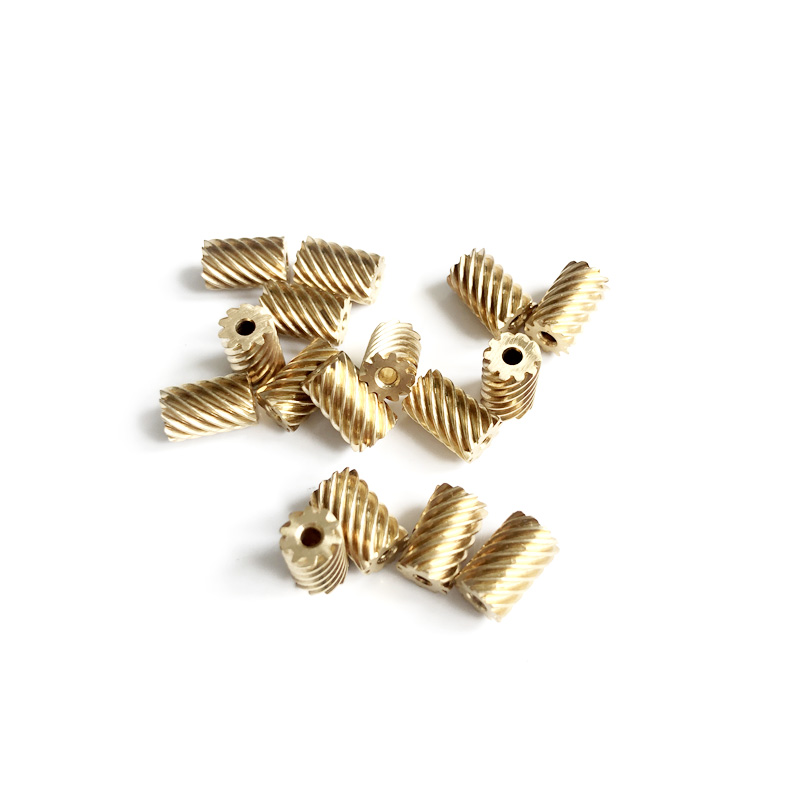
Small Module Multi-Start Worms
Small module multi-start worm shafts machined on CNC turning and whirling centres, module 0.2 mm...
View Details →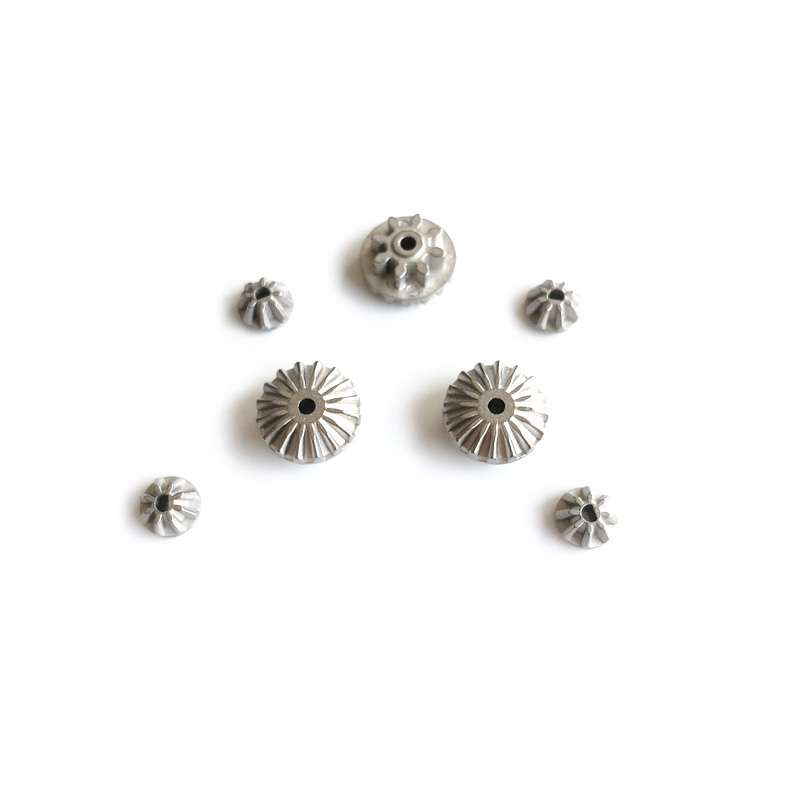
Micro Bevel Gears
Micro bevel gears from module 0.2 to 1.5 mm produced by metal injection molding in 17-4PH, 316L...
View Details →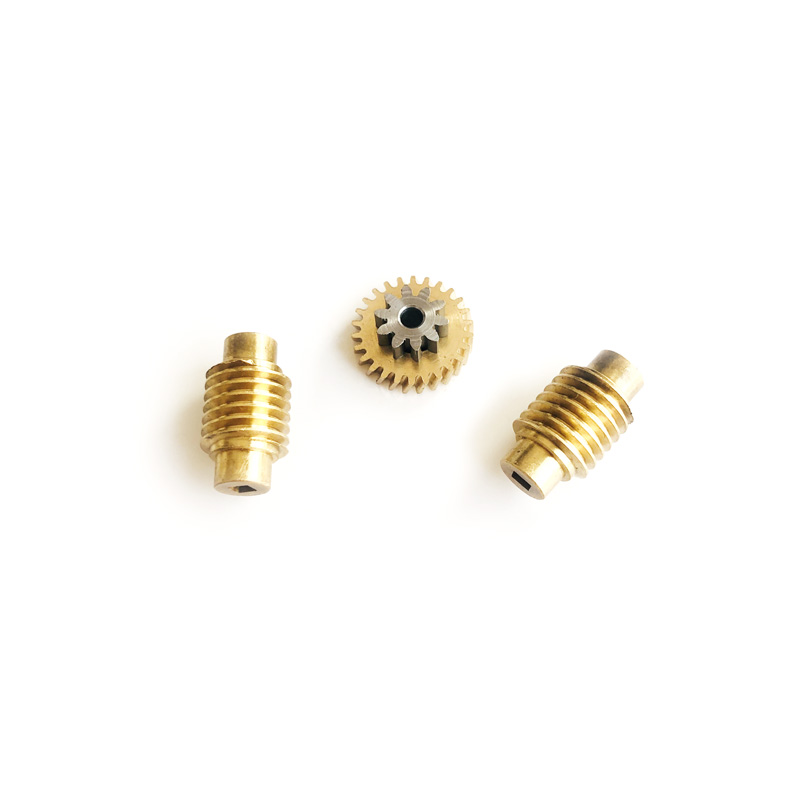
High Precision Worm Gear and Worm Wheel
High precision worm gear and worm wheel pairs in bronze, hardened steel and stainless steel,...
View Details →