Stainless Steel Earbud Housings
Metal Structural Parts
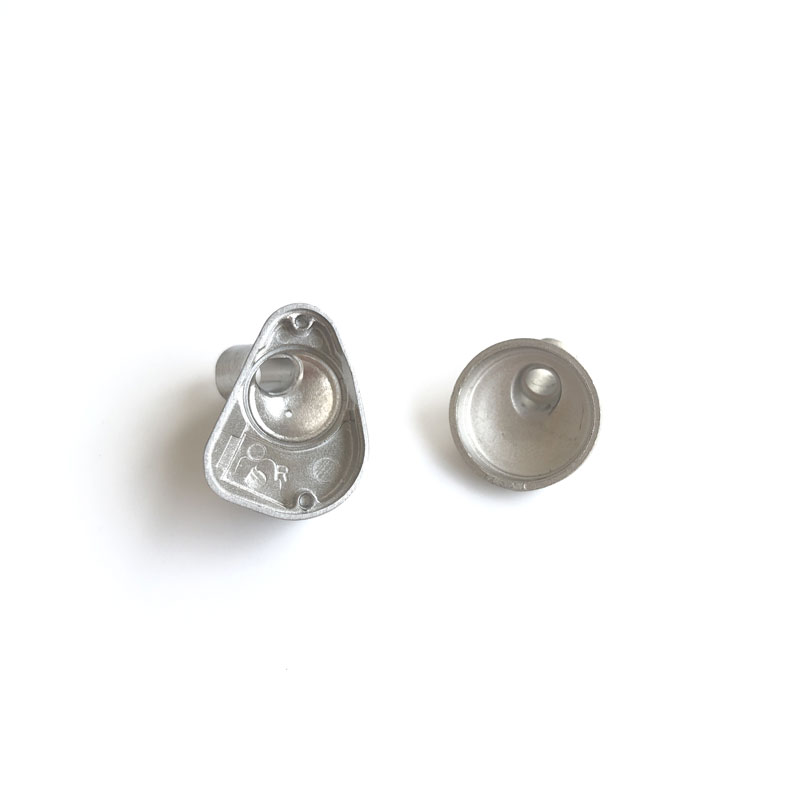
Stainless steel earbud housings moulded by MIM in 316L, 304L and 17-4PH, 0.35 mm walls, mirror polish to Ra 0.05, left and right halves from one mirrored tool.
| Category | Metal Structural Parts |
| Materials | Stainless 316L, Stainless 304L, 17-4PH, Ti-6Al-4V |
| Industries | Consumer Electronics, Audio, Wearables |
Send your drawing or 3D model — engineering review and quotation within 24 hours.
Overview
An earbud housing is a thin wall shell that carries the driver, the battery, the PCB and the antenna, and it is also the part the customer sees and touches first. The outside has to survive daily handling without a visible mark, while the inside has to hold an acoustic cavity to a volume that stays the same from unit to unit. Those two demands pull in opposite directions, which is why the part is usually the hardest item on a TWS bill of materials.
We mold stainless steel earbud housings by metal injection molding in 316L, 304L and 17-4PH, from 0.8 g to 12 g per half. Wall sections run down to 0.35 mm, internal ribs and screw bosses form in the same shot as the outer shell, and the cosmetic face is polished to Ra 0.05 mm where the design calls for a mirror finish.
Why metal injection molding suits an earbud housing
The shape is a closed shell with compound curvature, a stepped acoustic chamber, a battery pocket and two or three screw bosses. Deep drawing cannot form the internal ribs, and a stamped two piece assembly needs a seam that shows after polishing. Die cast aluminium handles the geometry but leaves porosity that appears as small pits once the surface is polished to a mirror.
Metal injection molding sidesteps all three problems. The cavity is cut into the tool once, so every internal rib, boss and gasket groove is a copy of the same geometry. There is no draft angle on the outer wall, which matters when the design has a near vertical side. The sintered body reaches 97 to 99 percent of theoretical density, so a polished surface stays free of the pits that give die castings away.
The economics work because the tool is a simple steel mould for feedstock rather than a hardened die for molten metal, and because one moulding cycle can produce four or eight cavities at once. Our metal injection molding service page covers the feedstock and furnace side in more detail.
What the housing has to do
Four requirements drive the design, and they conflict often enough that the drawing review has to settle the priority order before the tool is cut.
- Acoustic volume that repeats within about 1.5 percent, because the back cavity sets the driver tuning and a drifting volume shows up as a left right imbalance
- Sealing to the IPX4 or IPX5 target, which depends on the flatness of the mating face and the depth of the gasket groove
- Antenna performance, since a closed stainless shell attenuates Bluetooth, so the design needs a defined window or aperture
- Cosmetic surface that holds up to handling, sweat and pocket abrasion without showing scratches on the A face
Mass sits on top of those four. A stainless steel earbud housing half at 0.4 mm wall lands around 1.8 g, and the two halves plus the driver have to stay balanced in the ear. That budget is usually what decides the wall thickness, not the structural load.
Alloys and finishes
Three grades cover most programs. Density values are for the sintered condition, and they matter because they set how well the surface will polish.
| Grade | Density after sintering | Character | Where it is used |
|---|---|---|---|
| 316L | 7.85 to 7.95 g/cm3 | Molybdenum addition, good resistance to sweat and salt spray | Most earbud housings, the default choice |
| 304L | 7.80 to 7.88 g/cm3 | Lower alloy cost, adequate indoors, weaker against chlorides | Charging case shells, indoor products |
| 17-4PH (H1150) | 7.65 to 7.75 g/cm3 | Precipitation hardened, 930 to 1000 MPa tensile | Housings with snap features or a hinge that carries load |
| Ti-6Al-4V | 4.35 to 4.42 g/cm3 | 40 percent lighter, harder to polish, higher cost | Lightweight variants and sports models |
Finishing is where most of the visual character is decided. Mirror polish to Ra 0.05 or 0.1 mm gives the bright stainless look, bead blasting gives a satin texture that hides fingerprints, and PVD in black, gold or rose over a polished base gives the coloured variants. Passivation follows polishing on 316L to restore the chromium oxide layer that the abrasive work removed. Material data sits on the 316L stainless steel page and the 17-4PH page.
Capability for thin wall housings
Numbers below are what we quote against for stainless steel earbud housings. A design outside them gets reviewed rather than refused, but the review will usually change the tooling plan or the wall thickness.
| Part weight | 0.8 to 12 g per half, with most earbud housings between 1.5 and 4 g |
|---|---|
| Wall thickness | 0.35 mm minimum, 0.40 to 0.60 mm typical |
| As sintered tolerance | plus or minus 0.3 percent on dimensions above 10 mm, plus or minus 0.05 mm on small features |
| Minimum hole | 0.3 mm diameter through, depth to 3x diameter |
| Draft angle | Not required on the outer wall, parting line placed on a non cosmetic edge |
| Surface roughness | Ra 0.8 to 1.6 as sintered, Ra 0.05 to 0.2 after polishing |
| Cavities per tool | 2 to 16, with a mirrored left and right pair in the same tool |
| Lot size | 3,000 to 500,000 pieces per year, colour batches from 500 |
| Tooling lead time | 20 to 30 working days, first article to follow |
The same approach carries over to an over ear headphone housing, where the shell is larger, the wall runs 1.0 to 1.5 mm and the polished area is much bigger. The process does not change, but the surface defect budget on a large curved face is tighter because one pinhole rejects the whole side.
Design rules for a shell this thin
Most of the scrap in a thin wall housing traces back to four drawing decisions. Getting them right at review stage is cheaper than fixing them at polishing.
- Keep the wall uniform at 0.4 to 0.6 mm and avoid isolated thick masses, which cool last and pull porosity into the section that carries the cosmetics
- Place the gate on a face that will be machined or hidden, never on the A surface, because the gate scar never polishes out completely
- Design a sintering support into the plan, since a thin shell can sag under its own weight on the setter and lose the acoustic volume
- Radius every edge to at least 0.15 mm, because a sharp sintered edge chips during tumbling and shows as a bright line after PVD
A closed hollow cannot be moulded in one piece. The usual build is two halves with a lap joint, joined by laser weld, adhesive or a snap plus gasket, and the joint line has to be drawn as a cosmetic feature rather than left to the toolmaker.
The production chain
- Feedstock mixing, with the metal powder and binder ratio fixed per grade and lot
- Moulding of both halves in a mirrored cavity pair, with in process weight checks
- Debinding, first by solvent or catalytic route and then thermally
- Sintering at 1,350 to 1,400 degrees Celsius in vacuum or hydrogen, with a charted cycle
- Tumbling and grinding to remove the gate scar and blend the parting line
- Polishing to the specified Ra, with the cosmetic face worked last
- Secondary operations such as tapping, reaming or weld prep where the drawing calls for them
- Passivation, then PVD or bead blasting, then final inspection and packing
Every lot carries the powder batch, the moulding date, the sintering cycle and the polishing operator. A colour complaint on a delivered batch can then be traced back to the surface preparation that preceded the PVD.
Cosmetic acceptance and inspection
A cosmetic standard written as "no visible defects" causes disputes on the first shipment. The drawing should mark the A surface, the B surface and the hidden surface, and give a limit for each.
- A surface: no pinholes above 0.10 mm, no flow marks, no polishing swirl under 1,000 lux inspection
- Colour match between the left and right half within Delta E of 1.0, measured on the same instrument and the same geometry
- Datum dimensions checked on a CMM, with the acoustic cavity height treated as a critical characteristic
- Leak test on assembled halves where the IP rating requires it, with the pressure and dwell time named on the drawing
Density is checked by the Archimedes method on a sectioned sample from each sintering load, and chemistry by spectrometer against the grade certificate. The quality page lists the equipment behind those checks.
Where metal injection molding stops paying off
The route has edges, and naming them early is cheaper than discovering them during a ramp.
- Shells larger than about 80 mm at high volume usually belong on a die cast aluminium or stamped route, because the per piece cost of feedstock and sintering cannot compete there
- Large flat faces that must be polished to a mirror raise the defect rate, since one pinhole rejects the whole face
- Programs under about 3,000 pieces a year are better served by machining or die casting, because the tool is never amortised
- Anodised aluminium colour ranges and transparent or ceramic effects sit outside what a sintered stainless body can deliver
What to send for a quotation
Seven items let us quote without a round of questions, and they also let us flag a moulding risk before the tool is cut.
- A 3D model in STEP plus a 2D drawing with the A, B and hidden surfaces marked
- The alloy, the finish and the target Ra on each surface
- Wall thickness and the mass budget for the assembled pair
- Annual volume, release size and the number of colour variants
- The IP rating and the sealing method, since both drive the joint design
- The assembly route, whether laser weld, adhesive or snap fit
- Whether the left and right halves are mirrored, and whether a matched pair must ship together
Send the files through the contact page and an engineer will review the wall sections before a price is issued. The electronics industry page lists the other small metal parts we run for this sector, and the surgical forceps head case study shows the same thin wall and polishing discipline applied to a part with a tighter inspection regime.
Frequently asked questions
Can metal injection molding hold a 0.4 mm wall on an earbud shell?
Yes, and 0.4 mm is close to the comfortable range for a 316L feedstock. The limit is not filling the cavity but holding the shape through sintering, which is why we ask for a uniform wall and a support feature on the setter. Below 0.35 mm the sag risk and the polishing distortion grow faster than the weight saving is worth.
Will a stainless steel housing block the Bluetooth signal?
A closed metal shell attenuates the antenna, so the design needs a defined path for radio. The usual solutions are a moulded pocket that takes a plastic window, an aperture in the shell itself, or a plastic end cap bonded into the metal. Which one fits depends on the antenna position, and that decision should be made before the cavity layout is fixed.
How do you keep the left and right halves matched in colour?
Both halves come from the same tool and the same sintering load, and they are polished as a pair before PVD so the surface preparation is identical. Colour is then measured on a spectrophotometer and held to Delta E of 1.0. Mixing halves from different PVD batches is what causes the visible mismatch customers complain about.
What is the minimum order for a new earbud housing?
Tooling sets the floor rather than the moulding press. We quote from roughly 3,000 pieces a year upward, and below that the mould cost dominates the piece price. Trial shots can be run from the same tool once it exists, so a small pilot batch does not need a second tool.
More in Metal Structural Parts
Custom Machined Enclosure Parts
Custom machined enclosure parts built to your drawing in 6061 aluminium, 304 and 316L stainless,...
View Details →
E-Cigarette and Vape Metal Parts
E-cigarette metal parts and vape components moulded by MIM in 316L, 304L and 17-4PH, from 0.5 to...
View Details →
Automotive Metal Structural Parts
Automotive structural parts made by precision casting in carbon steel, 4140 and stainless, from...
View Details →