Brass Miniature Helical Gears
Mechanical Components
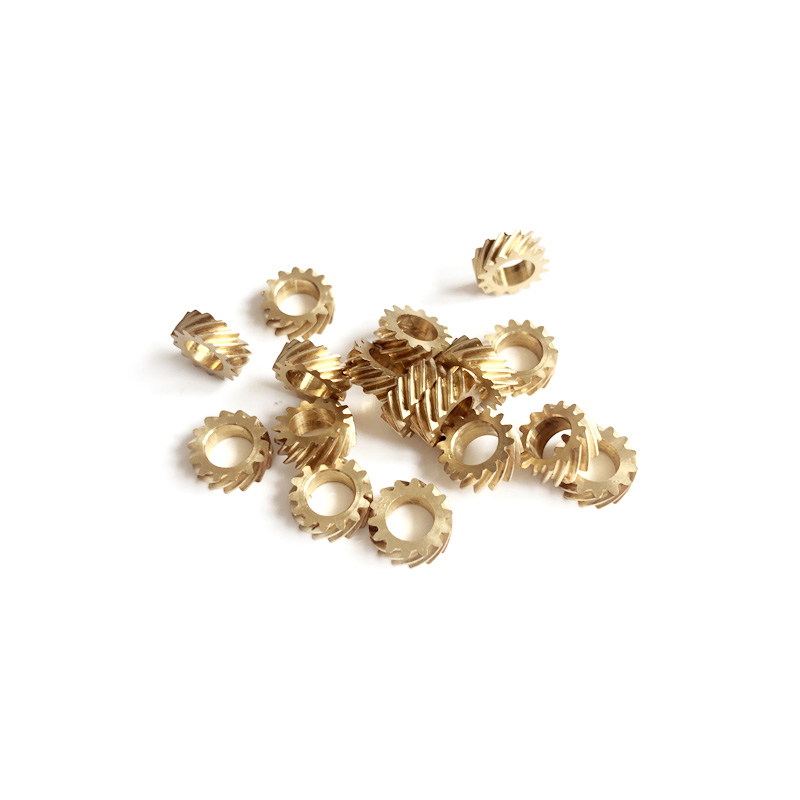
Brass miniature helical gears from module 0.2 to 1.5 mm in H62, H59 and lead-free grades, supplied as matched left and right hand pairs for quiet micro drives.
| Category | Mechanical Components |
| Materials | Brass H62, Brass H59, C36000, Lead-Free Brass |
| Industries | Industrial, Consumer Electronics, Automotive, Medical |
Send your drawing or 3D model — engineering review and quotation within 24 hours.
Yujiaxin Tech produces brass miniature helical gears for quiet, compact drive units. Each gear is made to the customer drawing, with helix angle, hand, module and backlash confirmed before a quotation is issued.
Why brass suits a miniature helical gear
Helical teeth engage gradually instead of all at once, so the mesh runs smoother and quieter than a spur pair at the same module. That advantage only pays off if the flank stays consistent along the helix, which is where material behaviour starts to matter.
Brass holds a clean flank at small module because it is homogeneous, dimensionally stable and does not work harden in a way that distorts thin teeth. It also runs with low friction against a steel or hardened brass mating gear, which keeps a micro drive quiet without lubrication in many instrument applications.
A brass helical gear is also non-magnetic and resists indoor corrosion, so it suits sensor housings, optical mounts and handpieces where stray magnetism or surface staining would be a problem.
Helix angle and hand
Two parameters decide whether a helical pair will assemble at all: the helix angle and the hand of each gear.
- Parallel shaft pairs need opposite hands, one left and one right, with identical helix angle and normal module
- Crossed axis pairs run at 90 degrees, with the two helix angles adding up to the shaft angle
- A hand mismatch produces a pair that binds rather than a pair that runs noisy, so the drawing must state hand explicitly
Miniature helical gears usually run between 15 and 30 degrees of helix angle. Higher angles buy smoother engagement and more overlap, but they raise axial thrust and reduce the face width actually carrying load.
Brass grades we work with
| Grade | Character | Typical use |
|---|---|---|
| H62 / CuZn38 | Balanced strength and ductility, good corrosion resistance | General instrument gears and gearbox stages |
| H59 / CuZn40 | Higher strength, slightly lower ductility | Loaded stages and thin web gears |
| C36000 | Leaded brass, easiest to hold to tight tolerance | High volume parts with tight bore and runout |
| Lead-free brass, C27450 or C69300 | No intentional lead addition | Projects with a restricted substance requirement |
Leaded grades are common because they hold tolerance well, but lead content has to be declared. If your project sets a lead limit, say so at enquiry stage and we quote a lead-free grade instead.
Typical specifications
| Parameter | Typical range |
|---|---|
| Module, normal | 0.2 to 1.5 mm |
| Number of teeth | 8 to 120 |
| Helix angle | 15 to 30 degrees, up to 45 degrees for crossed axis |
| Hand | Left or right, stated per part number |
| Outside diameter | 3 to 40 mm |
| Bore diameter | 0.5 to 8 mm, or plain shaft with no bore |
| Face width | 1 to 10 mm |
| Accuracy grade | DIN 3962 grade 7 to 9, AGMA Q10 to Q12 |
| Total composite deviation | 20 to 60 microns depending on module and grade |
| Radial runout | 0.010 to 0.030 mm |
| Backlash in a matched pair | 0.02 to 0.08 mm |
| Bore to tooth concentricity | 0.015 mm or finer |
The table shows ranges rather than limits for a small module brass helical gear. Final values come from your drawing and from the housing the pair has to fit into.
What a helical mesh changes in your design
A helical pair pushes each shaft along its own axis while it transmits torque. A miniature gearbox rarely has room for a large thrust bearing, so the design has to absorb that force through a shoulder, a retaining ring or a small ball race.
Helical teeth also slide along the contact line as they roll, which is what makes the mesh quieter and why flank finish matters more here than on a spur pair.
Accuracy, inspection and documentation
Helix deviation is the measurement that separates a good helical gear from a noisy one, and it is reported alongside total composite deviation, profile deviation and runout. We state helix deviation explicitly whenever the drawing calls out a DIN 3962 or AGMA grade.
Yujiaxin Tech operates to ISO 9001 and GJB 9001C-2017 quality systems. Shipments can include material certificates showing the copper alloy designation and lead content, dimensional reports, composite and helix deviation charts, and first article inspection data. These gears are supplied as components for your own assembly and approval.
Applications
- Micro gearmotors and quiet reduction stages
- Camera and lens drive mechanisms
- Audio equipment and precision instrument drives
- Dental and surgical handpiece transmissions
- Metering devices and small robotics joints
What to send for a quotation
- 2D drawing or 3D model with normal module, tooth count, helix angle and hand
- Whether the mating gear is part of the scope, and its part number if it exists
- Brass grade, or the restricted substance rules the alloy has to meet
- Bore, shaft or hub details, and the bearing arrangement taking axial thrust
- Accuracy grade, annual volume, and whether prototypes are needed first
FAQ
Can you supply the pair instead of a single gear?
Yes, and for a helical drive it is the better way to buy. Backlash, center distance and helix angle are properties of the pair, so quoting both parts together removes the risk of two suppliers working to slightly different reference dimensions.
Are left hand and right hand treated as separate part numbers?
They are, because the two parts are not interchangeable. Each hand gets its own drawing number and its own inspection record, and we mark the hand on the packaging so the pair cannot be mixed up at assembly.
Can you supply a lead-free brass grade?
Yes. C27450 and C69300 are both available, and we can quote either alongside a leaded option so you can compare cost against your substance restriction. Tell us the limit at enquiry stage rather than after quotation.
What is the smallest module you can hold on a helix?
Module 0.2 is practical in brass, provided the face width gives enough flank to measure. Below that the helix deviation becomes hard to verify with standard equipment, so we review any brass helical gear drawing below module 0.2 before committing to a tolerance.
Related pages
Browse the full mechanical components range, compare our miniature precision gears, review the materials we work with, or send us your drawing for a brass miniature helical gear quotation.
More in Mechanical Components
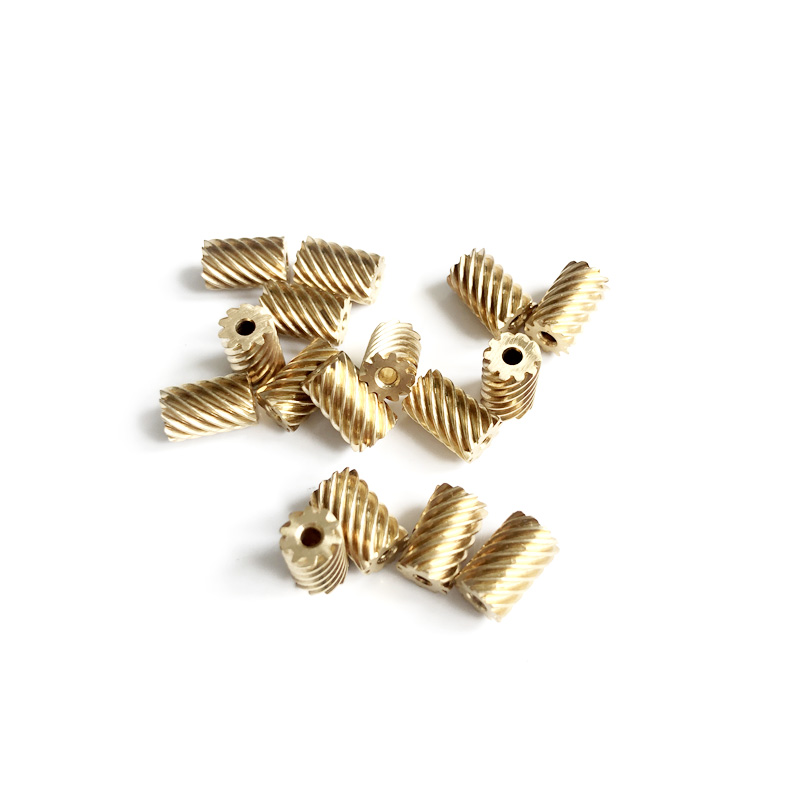
Small Module Multi-Start Worms
Small module multi-start worm shafts machined on CNC turning and whirling centres, module 0.2 mm...
View Details →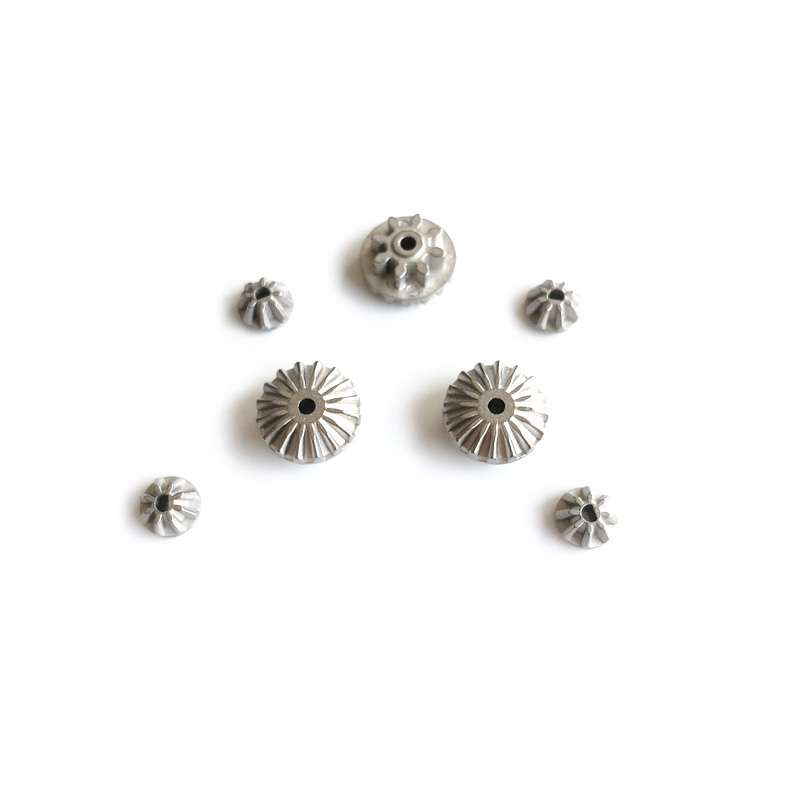
Micro Bevel Gears
Micro bevel gears from module 0.2 to 1.5 mm produced by metal injection molding in 17-4PH, 316L...
View Details →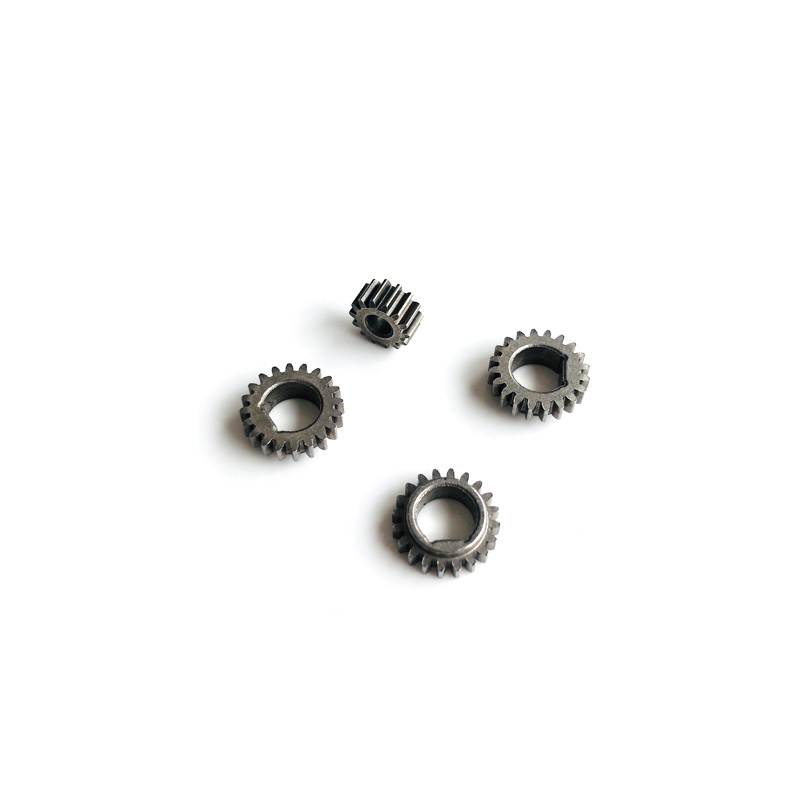
Powder Metallurgy Gears
Powder metallurgy gears pressed and sintered in iron copper carbon steel and stainless steel,...
View Details →